Session 1 · about 55 minutes · B1 / B2 / C1
Langley, segregation and the West Area ComputersThe real workplace behind the film
Discover West Area Computing as a real workplace: tasks, hierarchy, segregation, and the path to supervision.
By the end of the session, I can explain what a human computer did, say how segregation shaped daily work, and place three key dates on a timeline, at my level.
Lesson plan
- Warm-up from the photograph: 10 min
- Document study: West Area Computing: 25 min
- Differentiated writing / speaking: 12 min
- Expanding your vocabulary and Homework: 8 min
Activity 1 · Warm-up from the photograph (10 min)
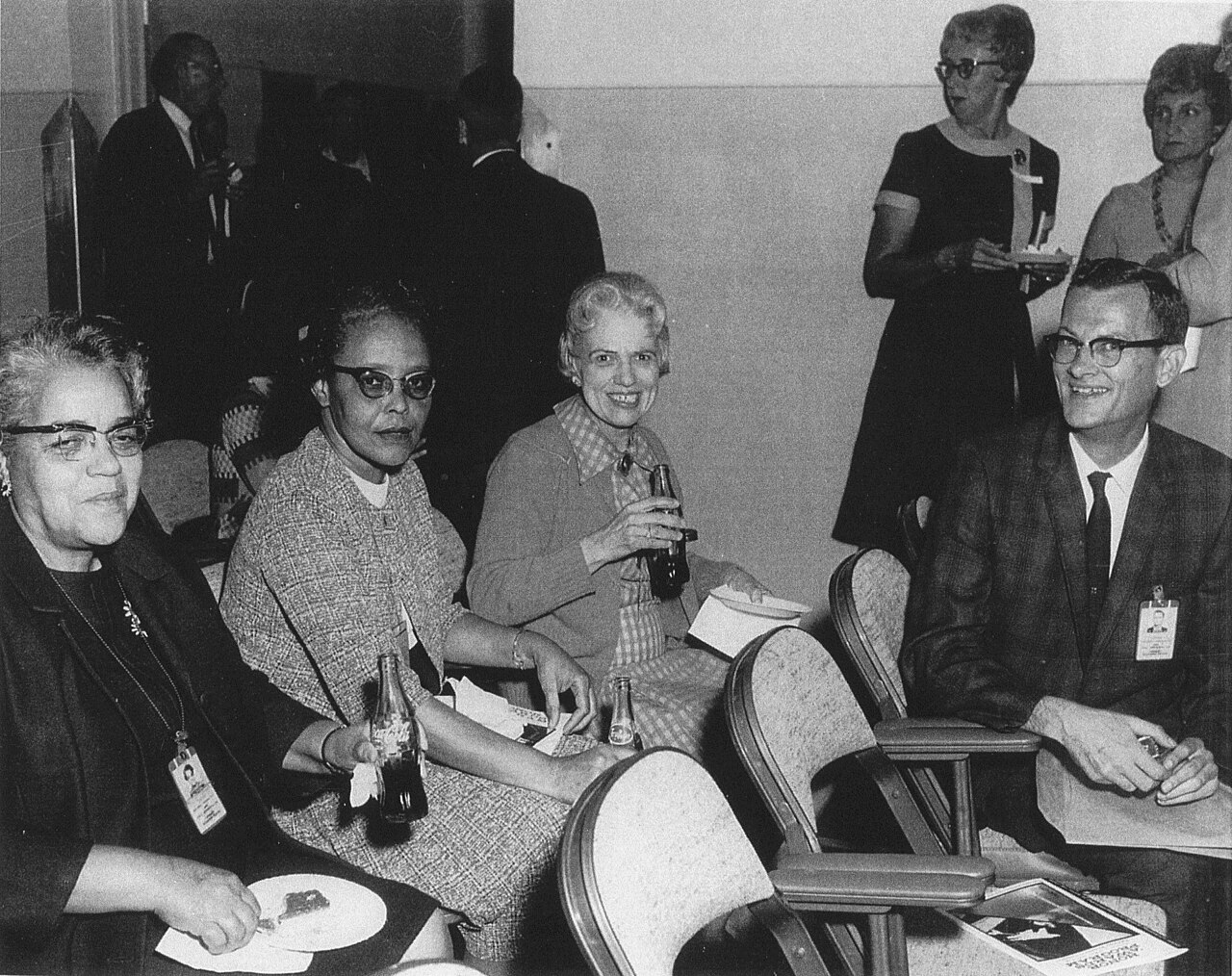
All levels. Look at the NASA photograph. In pairs:
- What kind of workplace do you see?
- Who were “human computers” before electronic machines?
- Why might Black women mathematicians appear together in one office photograph in the 1940s or 1950s?
Show answers · possible ideas
- A formal office of skilled women with papers and calculating work.
- People who did complex calculations for engineers by hand or with mechanical calculators.
- At Langley they were assigned to a segregated unit: West Area Computing.
Activity 2 · Document study (25 min)
Classroom synthesis (NASA biographies).
During the Second World War the National Advisory Committee for Aeronautics (NACA) hired women as mathematicians, called “computers”, to process wind-tunnel and flight data at Langley Research Center in Hampton, Virginia. Because of segregation in Virginia, newly hired Black women mathematicians worked in a separate unit: West Area Computing. They used separate dining and bathroom facilities at first. Dorothy Vaughan joined in 1943 and became head of the unit in 1949: NACA’s first Black supervisor. In 1958 NACA became NASA; segregated facilities at Langley were abolished that year. The Space Race had begun: the Soviet Union launched Sputnik 1 on 4 October 1957.
Based on NASA pages for Dorothy Vaughan, Katherine Johnson and Mary W. Jackson.
Choose your level.
In six to eight lines, explain: (a) what a human computer did; (b) what West Area Computing was; (c) one change in 1958.
In about 120 words, explain how segregation shaped daily work and promotion. Use at least four unit words. End with one sentence on why Vaughan’s 1949 role matters for a career story.
In 180 to 220 words, write a short workplace analysis: job content, hierarchy, barriers to promotion, and what “abolishing segregated facilities” changed for careers (not only for bathrooms). Use concessive linkers (although, yet, nevertheless).
Show answers · model points
- B1: computers calculated data; West Area was the segregated unit; 1958: NASA + end of segregated facilities.
- B2: add promotion difficulty; Vaughan as first Black supervisor = breakthrough in hierarchy.
- C1: analyse skill versus recognition; institutional change vs individual merit; avoid treating 1958 as a magic end to all bias.
Activity 3 · Timeline (all levels)
Order these events and add the year.
- NASA is created; segregated facilities at Langley are abolished.
- Dorothy Vaughan becomes head of West Area Computing.
- Sputnik 1 is launched.
- Dorothy Vaughan joins Langley (NACA).
Show answers · timeline
- 1943: Vaughan joins Langley.
- 1949: Vaughan becomes head of West Area Computing.
- 1957: Sputnik 1.
- 1958: NASA created; segregated facilities abolished.
| Word | Meaning | Path |
|---|---|---|
| a human computer | a person who calculates for engineers | B1+ |
| segregation | forced separation by race | B1+ |
| a supervisor | a person who leads a team | B1+ |
| to abolish | to end officially | B1+ |
| hierarchy | system of ranks at work | B2+ |
| promotion | moving up in a job | B2+ |
| institutional barrier | a rule or custom that blocks careers | C1 |
| recognition | being valued for one’s skill | C1 |
Copy six core words. Write one sentence each. Prepare: “West Area Computing mattered because…”
Write 100 to 120 words: Why does this workplace story matter for understanding careers in science?
Write 160 to 180 words: To what extent did ending segregated facilities guarantee equal promotion? Support with NASA facts.
Show answers · homework key
Check historical accuracy, level length, and use of target words. No film-only scenes as facts.